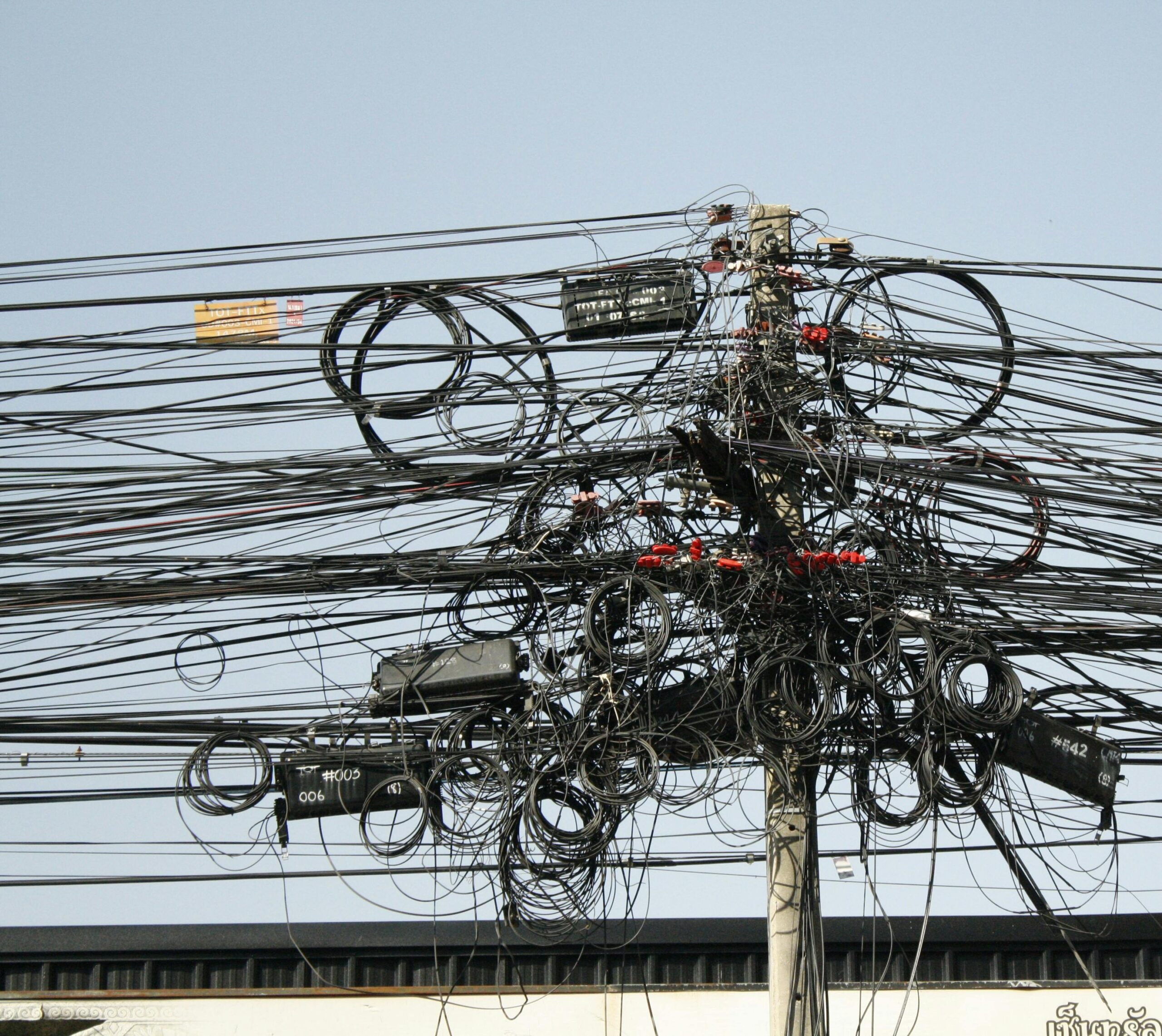
Every distributed team carries work that does not appear on any project plan. It is the labor of reconstruction: rebuilding context that was not captured, re-establishing decisions that were never recorded, re-explaining progress to someone who arrived after the work was already underway.
This labor is not exceptional. It happens on functioning teams, with capable people, inside organizations that have invested in collaboration tools and meeting cadences and documentation standards. It happens anyway because the conditions that produce it are structural, and structural conditions do not yield to effort alone.
Reconstruction consumes capacity
When work moves through a gap — a handoff, a sprint boundary, a leadership change, a two-week absence — something is at risk of being lost. If the reasoning behind a decision was never recorded, the decision itself may hold formally while the reasoning that made it defensible erodes. New participants inherit the conclusion without the logic. When that logic is later needed — to evaluate a scope change, to respond to a challenge, to justify a tradeoff — the team reconstructs it from memory, or relitigates it entirely.
The cost of that reconstruction is real. It is senior time, meeting time, and the attention of people whose capacity is already the limiting factor on any meaningful initiative. Organizations absorb this cost continuously without naming it. It appears in delayed timelines, in the length of status meetings, in the executive’s reasonable question “where are we on this” that takes two days to answer.
Coordination cost grows invisibly
Coordination was always part of distributed work. Each touchpoint costs the full overhead of re-establishing shared understanding before any advancement can happen. As the work grows more complex — more participants, more transitions — that overhead grows with it.
The increased cost is not a communication failure. It is a continuity failure that communication is being asked to compensate for.
Senior contributors become organizational memory
In the absence of a system that captures context, organizations create an informal substitute: they rely on the people who have been around long enough to remember.
The senior contributor who carries the history of a project is not carrying it because it is her job. She is carrying it because no one else has it, and without it the work would stall. She re-sends old context. She reconstructs decisions from meeting notes. She explains what was tried two years ago and why it failed. She does this alongside the work she was actually hired to do.
That arrangement looks like institutional knowledge. It is organizational debt.
The knowledge belongs to one person, which means it disappears when that person moves on, and it accumulates as residual responsibility on every project she has ever touched. She cannot close those projects, because if she does, so does the context they hold. This is one of the more reliable ways to lose a senior contributor. The work never stops following her.
Meetings absorb continuity failure
An organization’s meeting load is partly a structural diagnosis. When continuity fails — when shared understanding does not survive the gaps between working sessions — teams compensate by meeting more. They add check-ins to verify that everyone still holds the same picture. They extend status reviews to re-establish what changed and what did not. They schedule alignment conversations to repair misalignment that accumulated since the last one.
These meetings are not wasted, exactly. They restore something real. But they restore it from scratch, each time, which means the team is spending a portion of every cycle on recovery rather than advancement. The agenda says “status update.” What it means is: let us rebuild, together, the shared context we did not capture.
There is a test worth running. If every recurring meeting were canceled tomorrow, how much of the remaining work would continue moving forward on its own? For teams with strong continuity practices, the answer is most of it. For teams without them, the answer is very little. Meetings are not the problem. They are load-bearing symptoms.
Continuity determines execution weight
An organization becomes heavy when work cannot preserve its own continuity.
Heaviness is not the same as size. Small teams can be heavy. The weight shows up as the labor required to keep things from slipping: the check-ins added to compensate for decisions that didn’t hold, the documentation created after the fact to reconstruct what happened, the briefings given to every incoming participant because the work has no record of its own.
Each of those interventions is rational in isolation. A new team member needs context. A decision under pressure needs revisiting. A deliverable needs a status check. But cumulatively, they describe an organization that is spending a significant fraction of its capacity on work that already happened.
The condition is not unusual. It is the default state of distributed teams that have not addressed it directly. Context erodes unless it is captured. Decisions decay unless they are recorded and retrievable. Progress does not compound unless it is deliberately preserved. These are not aspirational principles. They describe how work behaves under real conditions, including the conditions most distributed teams operate in every day.
The practical implication is structural: the overhead required to prevent this decay is smaller than the overhead required to absorb it after the fact. Teams that install continuity practices are not doing more work. They are doing less of the same work, repeatedly.
What returns when reconstruction work is eliminated is not just time. It is the capacity for work that compounds — initiatives that build on what the last cycle produced, decisions that stay settled long enough to generate something from them, contributors whose expertise goes toward advancement rather than recovery. That is the condition for sustained innovation. Continuity is what makes it possible.